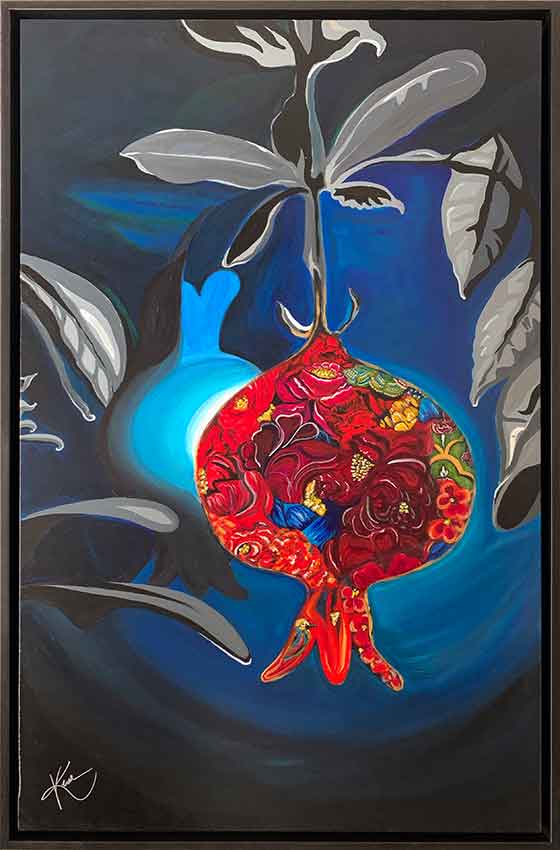
THE JEWEL OF WINTER
ACRYLIC ON CANVAS 55X90CM
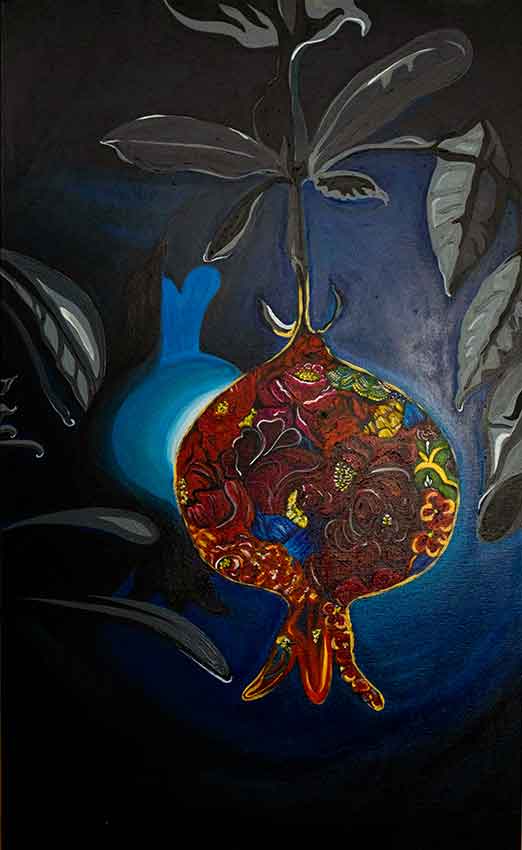
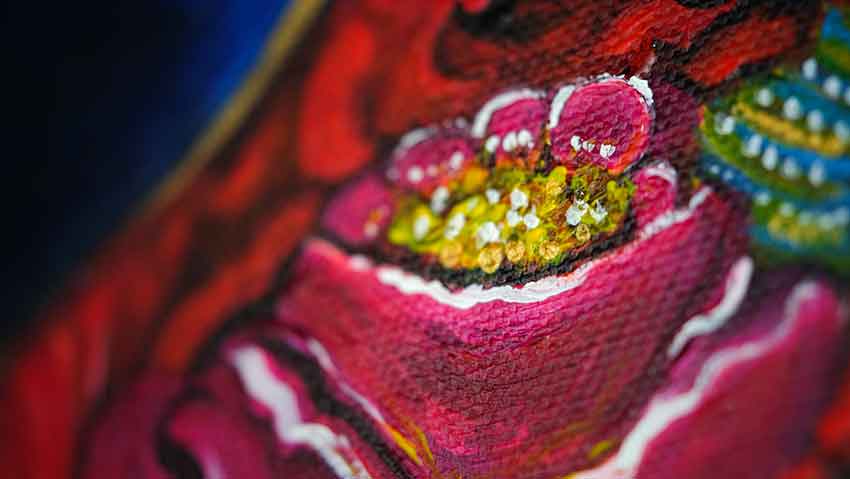
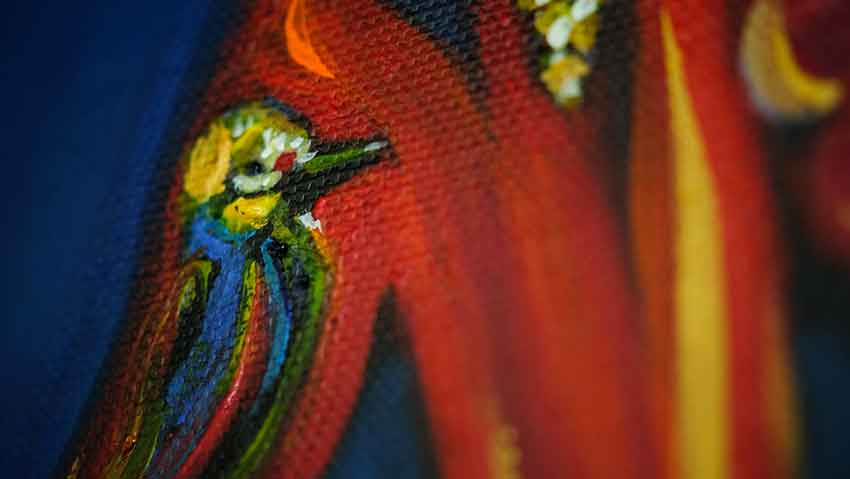
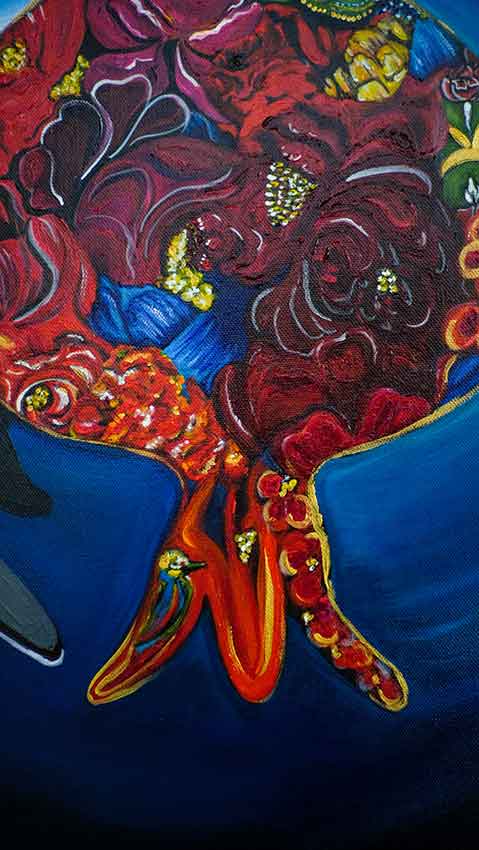
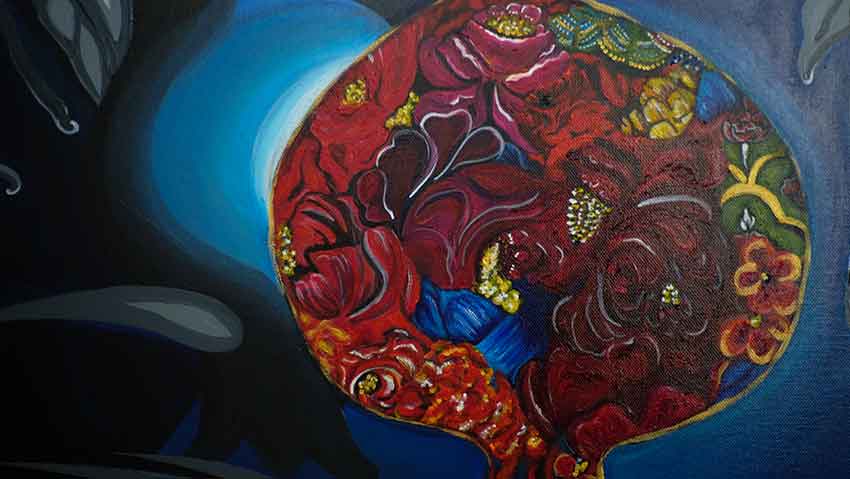
The Jewel Of Winter Painting by Kristel Bechara is a striking acrylic on canvas (55x90cm) that transforms the humble pomegranate into a luminous emblem of myth, fertility, and the bittersweet rhythms of the seasons. Rendered in a vivid mosaic of crimson, ruby, and rose against an oceanic blue ground, this contemporary canvas art reimagines an ancient symbol with a thoroughly modern, jewel-like sensibility.
The Greek Mythology Behind the Jewel Of Winter Painting
Pomegranates hold great symbolic significance in Greek mythology, especially in the epic tale of the abduction of Persephone, the goddess of vegetation, by Hades, the god of the Underworld. Having been abducted and imprisoned, Persephone was tricked into eating six pomegranate seeds by Hades which by the rules of Fates doomed her to spend six months of the year in the Underworld. This news devastated Persephone’s mother, Demeter, the goddess of fertility, who went into mourning that resulted in all things on Earth to stop growing. Her mourning only stopped when she was reunited with Persephone, who was released from the Underworld every six months of the year.
This mythos became the basis for the ancient Greeks’ explanation of the seasonal cycles. Spring and summer marked the reunion of the mother and daughter leading Earth to flourish and grow. While, winter and autumn was a result of Persephone’s return to the Underworld and Demeter’s subsequent mourning which made the Earth infertile. This led to the tradition in ancient Greece to offer pomegranates to the goddess Demeter in return for healthier crops and the longevity of Earth’s fertility. You can read more about this enduring myth in the Metropolitan Museum of Art’s essay on Demeter and Persephone.
Symbolism Woven Into the Jewel Of Winter Painting
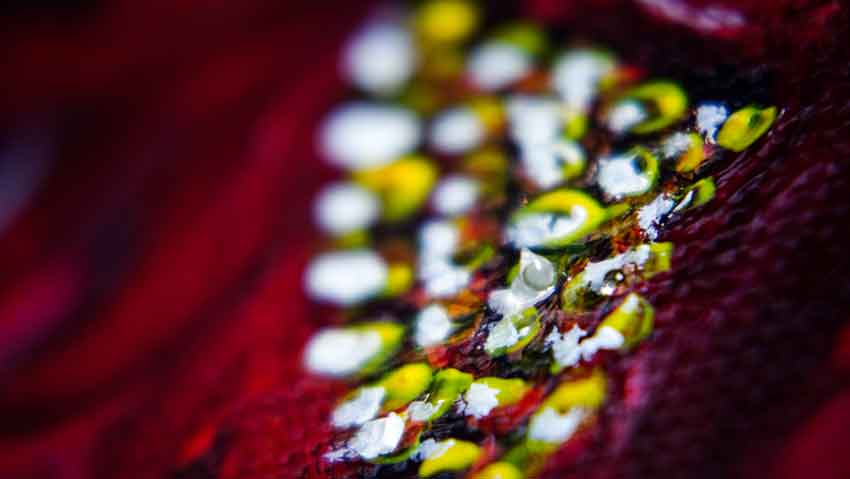
This oeuvre honours the dichotomous nature and history of the Pomegranate, which in some faiths and cultures is considered a fruit of Paradise that signifies life and bountiful fertility. While on the other hand, it also serves as a symbol of death, infertility and the tragic fate of a revered Greek goddess. The Jewel Of Winter Painting embraces this duality: each ruby seed glows like a tiny lantern against the cold blue, suggesting both the warmth of life held within the cold months and the seeds of grief that Persephone carried back to her mother every spring.
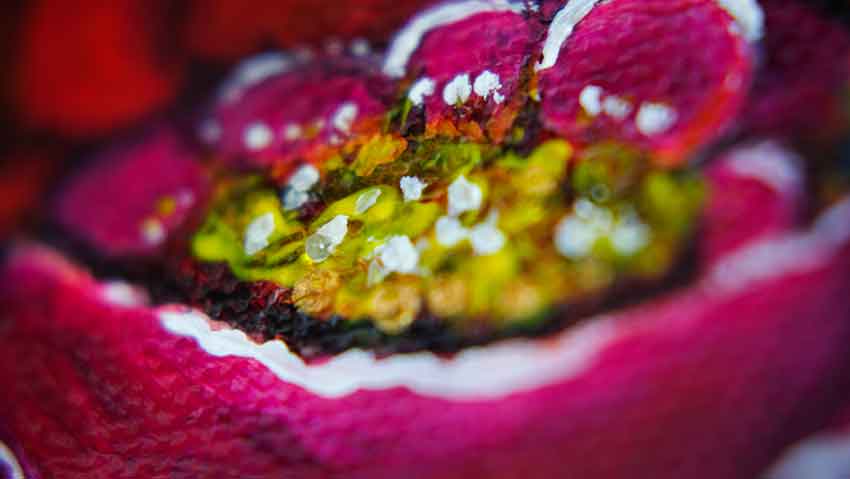
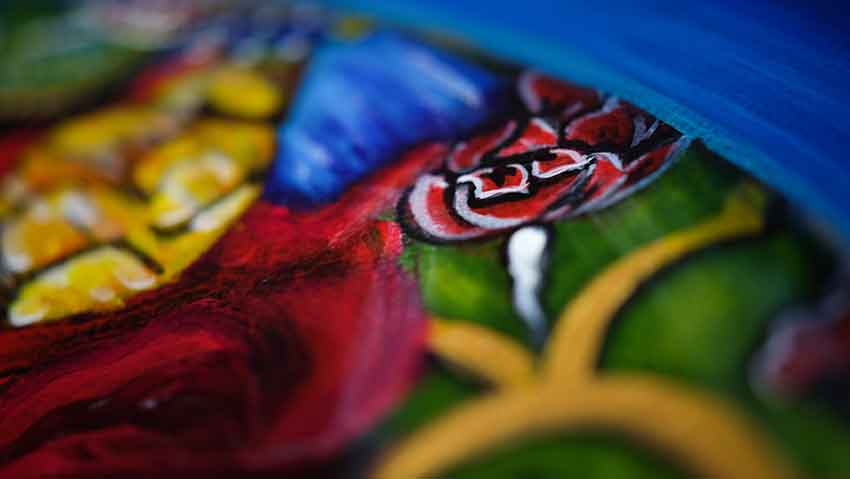
Across centuries the pomegranate has appeared in Persian poetry, Christian iconography, Jewish ritual textiles, and Anatolian folk art, always tied to abundance, resurrection, and the threshold between worlds. Kristel weaves these layered meanings into the composition with confident, painterly brushwork, gilded silvery foliage, and a deep midnight palette that turns the fruit into a beacon.
Bringing the Jewel Of Winter Painting Home
Hung above a console, fireplace, or reading nook, the Jewel Of Winter Painting becomes a quiet conversation piece that shifts with the light: ember-bright at dawn, cool and contemplative under evening lamps. Each original is signed, accompanied by a certificate of authenticity, and prepared for international white-glove shipping. Curated prints and related works are available in our online shop, where collectors can also commission bespoke pieces.
GET IN TOUCH to bring the Jewel Of Winter Painting, or a sister work from the Psychomachia series, into your own collection.
THE JEWEL OF WINTER
ACRYLIC ON CANVAS 55X90CM
Pomegranates hold great symbolic significance in Greek mythology, especially in the epic tale of the abduction of Persephone, the goddess of vegetation, by Hades, the god of the Underworld. Having been abducted and imprisoned, Persephone was tricked into eating six pomegranate seeds by Hades which by the rules of Fates doomed her to spend six months of the year in the Underworld. This news devastated Persephone’s mother, Demeter, the goddess of fertility, who went into mourning that resulted in all things on Earth to stop growing. Her mourning only stopped when she was reunited with Persephone, who was released from the Underworld every six months of the year.
This mythos became the basis for the ancient Greeks’ explanation of the seasonal cycles. Spring and summer marked the reunion of the mother and daughter leading Earth to flourish and grow. While, winter and autumn was a result of Persephone’s return to the Underworld and Demeter’s subsequent mourning which made the Earth infertile. This led to the tradition in ancient Greece to offer pomegranates to the goddess Demeter in return for healthier crops and the longevity of Earth’s fertility.
This oeuvre honours the dichotomous nature and history of the Pomegranate, which in some faiths and cultures is considered a fruit of Paradise that signifies life and bountiful fertility. While on the other hand, it also serves as a symbol of death, infertility and the tragic fate of a revered Greek goddess.