The Furies III: Reimagined as the Thought Police
ACRYLIC ON CANVAS 120X80CM
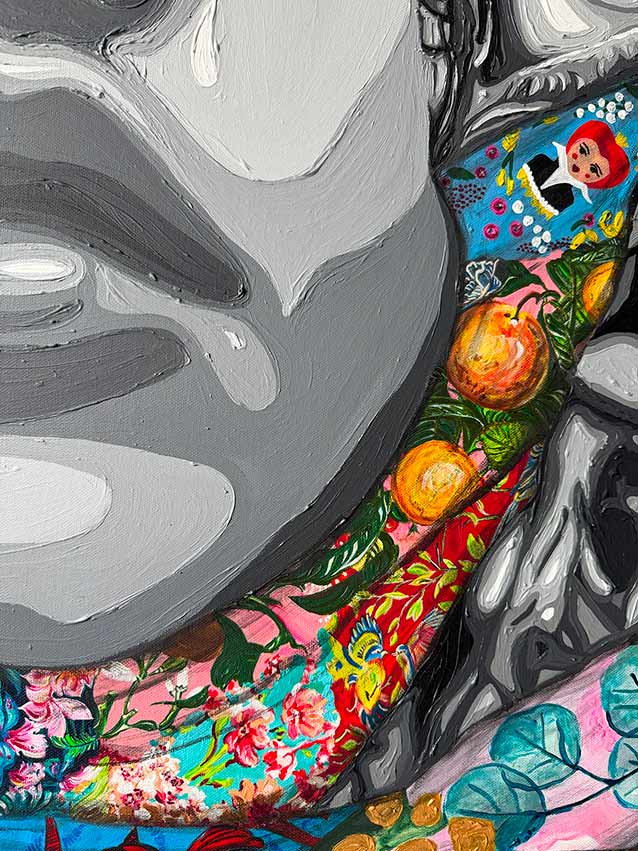
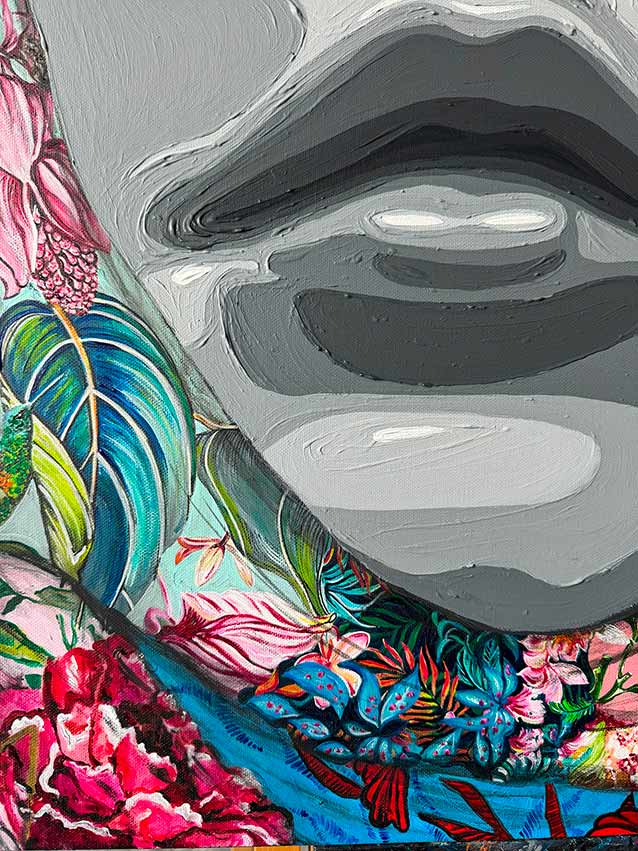
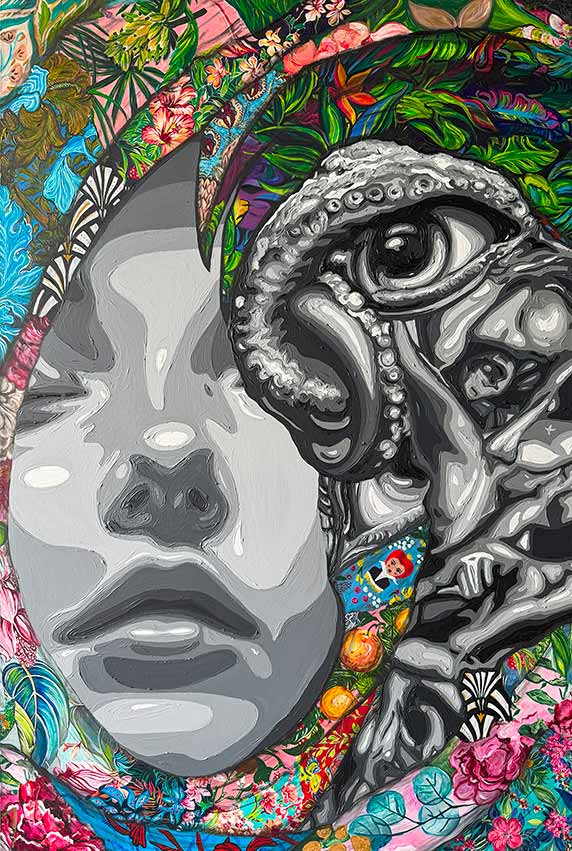
In The Furies: Reimagined as the Thought Police, the artist reinterprets the Furies ‘Greek goddesses of vengeance’ through the lens of George Orwell’s 1984. This powerful triptych explores the suffocating dominance of surveillance and control over the human mind, using a surreal, symbolic interplay of monochrome and vibrant color.
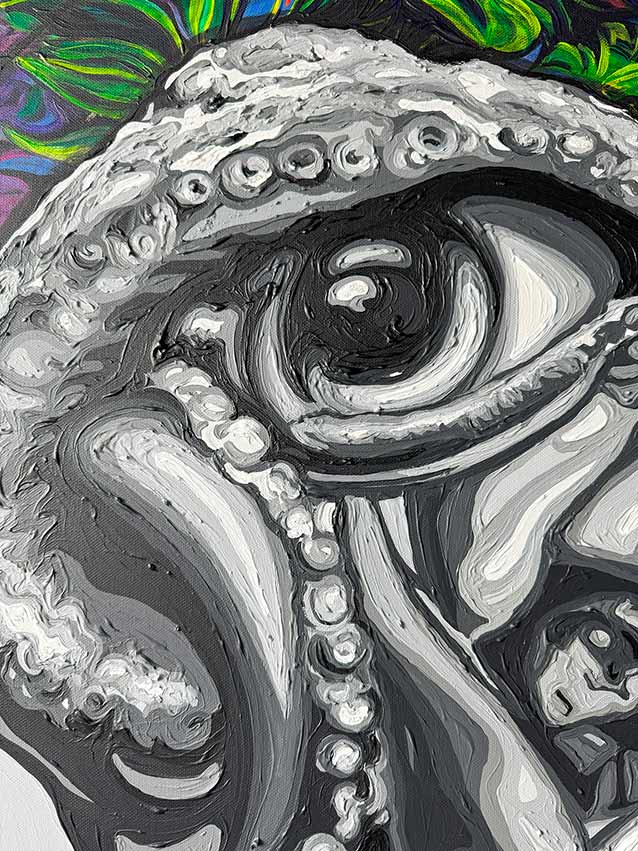
Each panel tells a layered story of psychological oppression and defiant hope. The Furies, here imagined as the omnipresent Thought Police, are represented by bulging, invasive eyes rendered in stark black-and-white monotones. These eyes are relentless, looming over the composition, embodying the constant surveillance and control imposed on individuals. Their gaze is not merely watchful, it is suffocating, wrapping around the psyche like an all-encompassing force, draining individuality and thought.
Painting 1 introduces a fragmented woman’s face, her grayscale visage partially consumed by the Thought Police’s watchful presence. The oppressive eyes dominate, while vivid blooms of flowers emerge cautiously, their colors defying the monochrome control. These flowers symbolize fragile hope, resilience that refuses to be extinguished.
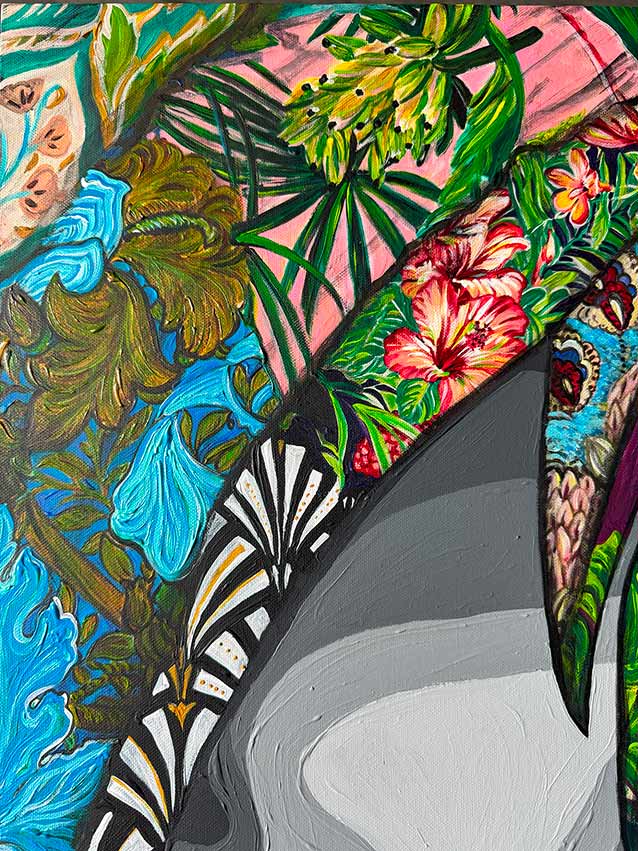
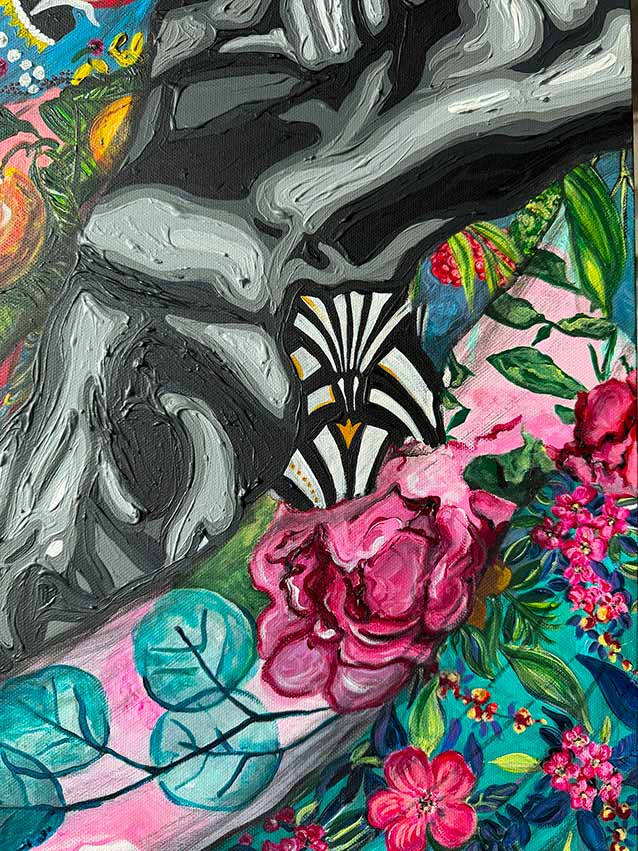
Painting 2 portrays the woman’s face fractured further, with cracks revealing an explosion of organic patterns and flourishing life beneath. The vibrant flowers and intricate motifs seem to push back against the weight of control, asserting the mind’s capacity for rebellion and renewal, even as the Thought Police attempt to suppress it.
Painting 3 reaches a crescendo of visual tension. The Thought Police’s black-and-white dominance, with their bulging eyes and invasive forms, is intertwined with an organic, floral-patterned chaos. The grayscale thoughts of oppression are wrapped and pierced by swirling tentacle-like shapes, resembling octopus limbs. These dynamic, colorful patterns represent hope and freedom breaking free from confinement, as if the mind is emerging from a dream-like haze of suppression. The composition suggests an organic transformation, a reclamation of self in the face of oppressive forces.
Throughout the series, the artist uses the contrast between monotone and vivid color to evoke the tension between control and freedom, despair and hope. The bulging eyes of the Thought Police are oppressive, dominating the scenes, but the organic blooms and vibrant patterns reclaim space with quiet defiance. The triptych becomes a visual allegory for the resilience of the human spirit and the enduring power of beauty, even under the most relentless watch.
This series invites viewers to reflect: How much of our thoughts are truly our own? Can hope, symbolized by life’s organic beauty, find a way to thrive even under totalitarian control?
The Furies III: Reimagined as the Thought Police
ACRYLIC ON CANVAS 120X80 CM
In The Furies: Reimagined as the Thought Police, the artist reinterprets the Furies ‘Greek goddesses of vengeance’ through the lens of George Orwell’s 1984. This powerful triptych explores the suffocating dominance of surveillance and control over the human mind, using a surreal, symbolic interplay of monochrome and vibrant color.
Each panel tells a layered story of psychological oppression and defiant hope. The Furies, here imagined as the omnipresent Thought Police, are represented by bulging, invasive eyes rendered in stark black-and-white monotones. These eyes are relentless, looming over the composition, embodying the constant surveillance and control imposed on individuals. Their gaze is not merely watchful, it is suffocating, wrapping around the psyche like an all-encompassing force, draining individuality and thought.
Painting 1 introduces a fragmented woman’s face, her grayscale visage partially consumed by the Thought Police’s watchful presence. The oppressive eyes dominate, while vivid blooms of flowers emerge cautiously, their colors defying the monochrome control. These flowers symbolize fragile hope, resilience that refuses to be extinguished.
Painting 2 portrays the woman’s face fractured further, with cracks revealing an explosion of organic patterns and flourishing life beneath. The vibrant flowers and intricate motifs seem to push back against the weight of control, asserting the mind’s capacity for rebellion and renewal, even as the Thought Police attempt to suppress it.
Painting 3 reaches a crescendo of visual tension. The Thought Police’s black-and-white dominance, with their bulging eyes and invasive forms, is intertwined with an organic, floral-patterned chaos. The grayscale thoughts of oppression are wrapped and pierced by swirling tentacle-like shapes, resembling octopus limbs. These dynamic, colorful patterns represent hope and freedom breaking free from confinement, as if the mind is emerging from a dream-like haze of suppression. The composition suggests an organic transformation, a reclamation of self in the face of oppressive forces.
Throughout the series, the artist uses the contrast between monotone and vivid color to evoke the tension between control and freedom, despair and hope. The bulging eyes of the Thought Police are oppressive, dominating the scenes, but the organic blooms and vibrant patterns reclaim space with quiet defiance. The triptych becomes a visual allegory for the resilience of the human spirit and the enduring power of beauty, even under the most relentless watch.
This series invites viewers to reflect: How much of our thoughts are truly our own? Can hope, symbolized by life’s organic beauty, find a way to thrive even under totalitarian control?.
In her right hand, delicately poised, Persephone holds a pomegranate – a powerful symbol in Greek mythology, representing the cyclical passage between worlds. Under her left arm, a discreetly placed clock symbolizes the duality of time she embodies, ruling half the year above with the living and the other half below as the queen of the dead. These subtle yet powerful inclusions serve as a reminder of her tale of abduction, love, and the cyclical passage between worlds.
“Persephone: The Lotus Queen” is not just a portrayal but a concise, symbolic narrative that delves into the heart of the goddess’ story. It invites viewers to explore the intricate layers of Persephone’s dual existence and to reflect on the perpetual cycle of life, death, and rebirth that she represents.